
About Panda Greenhouse Engineering & Manufacturing
Industrial horticultural facilities engineered for turnkey productivity, international resilience, and certified manufacturing excellence.

Who Are We?
Welcome to learn more about our greenhouse factory! As a leading manufacturer of greenhouse materials, we specialize in providing high-quality greenhouse solutions to customers around the globe. With over 10 years of export experience and advanced production facilities, we are dedicated to meeting all your greenhouse construction and operational needs.
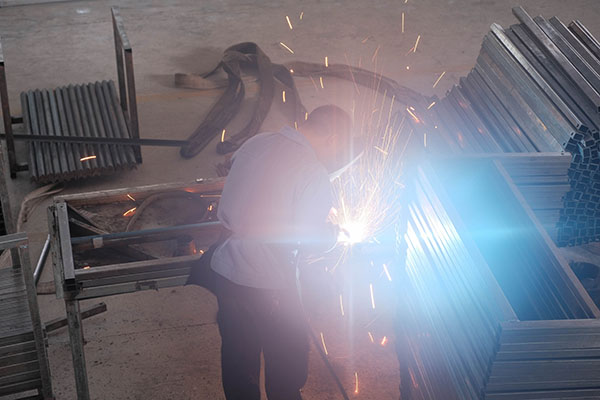
We operate a large, state-of-the-art factory spanning 30,000 square meters, equipped with five efficient production lines. These production lines support both standardized and custom manufacturing, ensuring that each product meets specific customer requirements. Our factory combines cutting-edge manufacturing technology with stringent quality control processes to ensure high standards and consistency for every product.
Explore Engineering Matrix


Section 2: Glazing Decision Matrix: Glass vs. PC-Sheet vs. Plastic-Film
Selecting covering materials based on photon efficiency, thermal conductance (U-Value), life-cycle operational durability, and initial structural capital outlay.
| Covering Material | Light Transmission (PAR) | Thermal Insulation (U-Value) | Operational Lifespan | Unit Cost (Capex / m²) | Structural Load Requirement | Target Cropping Profile |
|---|---|---|---|---|---|---|
| Venlo Float / Diffuse Glass | 89% - 91% (PAR) | 5.8 W/m²·K (Single) / 2.8 (Double) | 25+ Years | $85 - $160 / m² | Heavy steel profile, strict foundation | Vine tomatoes, sweet peppers, cut flowers, research facilities |
| Multi-Wall Polycarbonate (PC) | 75% - 82% (High Diffuse) | 3.0 - 3.2 W/m²·K (8mm Twin-wall) | 10 - 15 Years (Anti-UV) | $45 - $80 / m² | Medium gauge steel framing | Commercial nursery, propagation, regions prone to heavy hail |
| Co-Extruded Polyethylene Film | 86% - 90% (Initial) | 6.3 W/m²·K (Single) / 3.3 (Double Inflation) | 3 - 5 Years (Replacement cycle) | $18 - $38 / m² | Light to medium structure | Leafy greens, seasonal berries, fast turnover commercial vegetables |
Architectural Glass Performance
Features high photon transmittance without degradation over decades. Diffuse glass versions offer deep canopy penetration, eliminating solar burn on high-wire crops. While capital requirements are the highest, long-term ROI is achieved through negligible degradation and reduced auxiliary fixture hours.
Polycarbonate (PC) Thermal Barrier
Multi-wall polycarbonate offers thermal insulation advantages in northern or cold climates, lowering heating fuel demands by up to 30% compared to single glass. High impact resistance offers structural protection against severe hail storms and gust wind events.
Dual-Inflatable PO/PE Film
Dual-layer air-inflated film structures deliver thermal insulation comparable to twin-wall PC at lower initial Capex. Modern 5-layer co-extrusion films provide anti-drip, anti-dust, and thermal blocking properties suitable for large-scale agricultural expansions.
Evaluating high-value light management? Read how covering systems pair with photoperiod adjustments in our Blackout & Photoperiod Architecture Guide, or jump directly down to Section 5: Tailored Crop & Investor Matrix.
Blackout Greenhouse Architecture: Precision Photoperiod Control & Opex Reduction
Harnessing automated mechanical deprivation systems to drive commercial floriculture, medicinal herbal compounds, and gourmet mushroom yields.
The Science of Complete Photoperiod Isolation
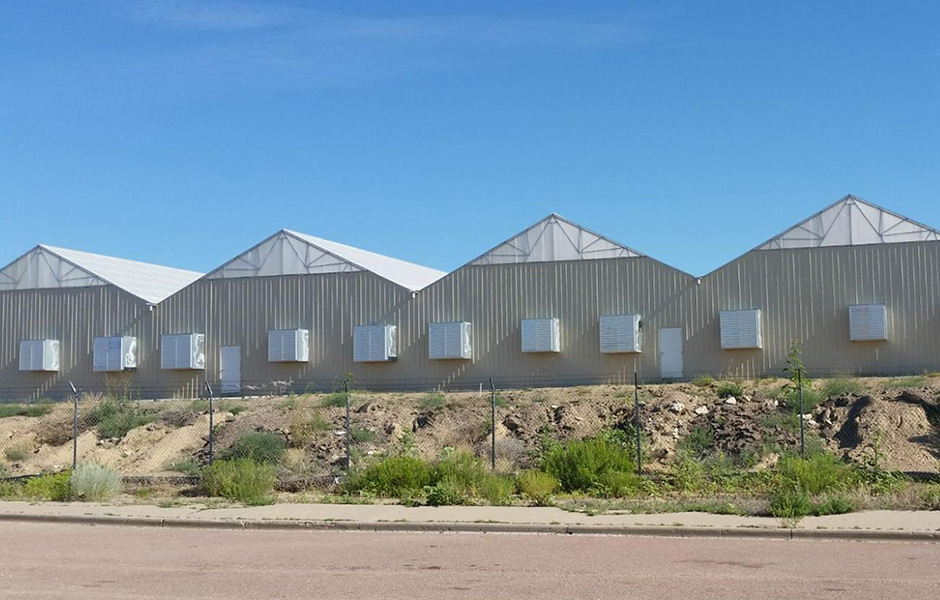
Planting high-value plants such as cannabis, dark environments help manage plant growth and harvest. This design can create a completely dark environment, through which the light cycle of plants can be precisely controlled, promoting flowering, extending the growth cycle, and improving crop quality and yield.
More diverse greenhouse types and environmental conditions, we can choose glass, PC board, or plastic film as covering materials. Simultaneously, a shading system is installed internally to achieve full shading effect.
Use specialized blackout curtains, fabrics, or other shading materials to ensure that external light cannot pass through the greenhouse. Ensure that the internal environment is completely dark. Provide a fully controlled lighting environment, enabling precise management of plant growth cycles and conditions in production and research.
- ✓ 99.9% Absolute Dark Deprivation: Multi-layer breathable blackout curtains eliminate light leaks along side tracks.
- ✓ Opex Optimization: Exploits free natural sunlight for vegetative stages, closing automated shades only for photo-induction, cutting artificial electricity consumption up to 60%.
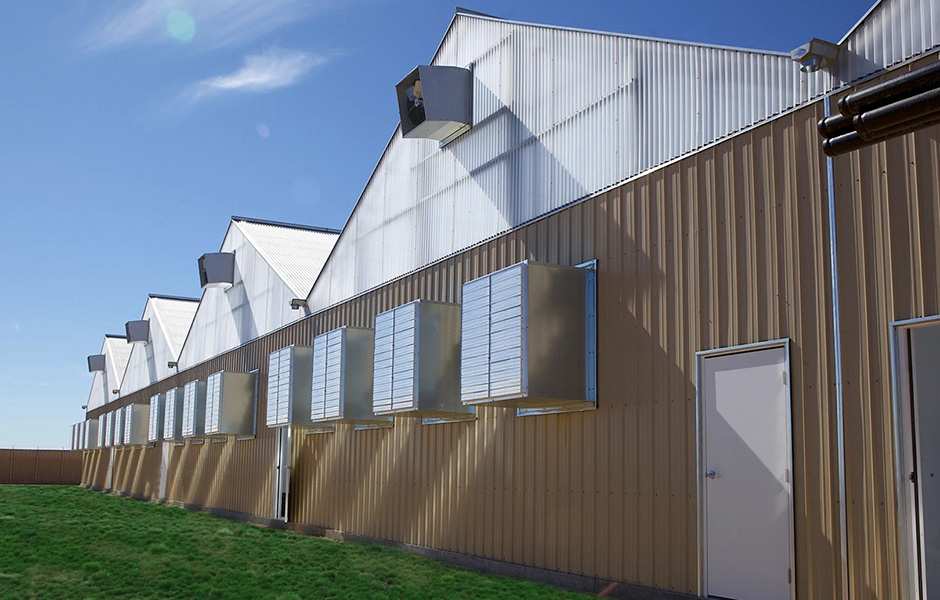
- ✓ Microclimate Integration: Light-trap exhaust baffles allow active air exchange without photoperiod contamination.
Operational Cost Comparisons: Hybrid Solar Deprivation vs. Indoor Warehouse
Indoor warehouse agricultural operations rely 100% on high-pressure sodium (HPS) or LED fixtures, requiring 35-50 kWh per square meter per cycle just for lighting, plus heavy air conditioning loads. A Panda engineered blackout greenhouse utilizes ambient solar energy (up to 1,000 W/m² of free natural radiation) and triggers flowering through automated shading curtains.
Key Financial Metric:
Power consumption savings typically average $0.12 - $0.22 per gram of finished botanical product, reducing operating costs while maintaining year-round production schedules.
Suitable for: Poinsettias, Chrysanthemums, Special Botanical Crops, Medicinal Herbs, and Shiitake/Oyster mushroom cultivation where darkness cycles dictate growth.
Tunnel vs. Multi-Span: Scale, Ventilation, and Mechanization Logic
Balancing capital deployment against volumetric air stability, automated gutter systems, and labor efficiency.
High Tunnel & Quonset Architecture
Single-bay structures constructed from cold-formed galvanized tubular steel arcs, anchored with ground posts or ground screws.
- Structural Footprint: Individual spans usually 6m to 9.6m wide, lengths 30m to 60m.
- Ventilation Strategy: Manual or gear-motor roll-up side curtains relying on natural thermal buoyancy and cross breezes.
- Mechanization Level: Low to medium; limited overhead hanging loads (max 15-20 kg/m²). Internal machinery movement restricted by end-wall doorways.
- Capital Expenditure: Ultra-low, ranging from $12 to $25 per square meter.
Best Applied To: Field extension, seasonal organic berries, soil-bound brassicas, and low-capex regional startups.
Multi-Span Commercial Connected Gutters
Interconnected gutter bays eliminating internal partition walls to form single microclimate chambers up to several hectares.
- Structural Footprint: Clear spans from 8m, 9.6m, to 12m; gutter heights elevated from 4.5m to 7.5m.
- Ventilation Strategy: Continuous roof butterfly vents, pad-and-fan negative pressure cooling, and horizontal air circulation fans.
- Mechanization Level: High compatibility with automated boom sprayers, internal logistics carts, monorail harvest tracks, and computer fertigation.
- Thermal Volume: Higher air mass buffers against rapid outdoor temperature spikes, stabilizing leaf vapor pressure deficit (VPD).
Best Applied To: Industrial hydroponics, centralized seed nurseries, large commercial vegetable enterprises.
Curious how multi-span structures integrate with covering selections? Return to Section 2: Glazing Decision Matrix for engineering specifications.
Solar Greenhouses: Dual-Revenue Model ("Energy + Agriculture")
Transforming agricultural structures into localized energy generation assets while maintaining controlled internal crop agronomy.
The Dual-Revenue Dynamics
The modern solar greenhouse (Agrivoltaics) integrates photovoltaic panels onto southward or non-shaded roof slopes, generating off-grid operational electricity or grid-tied feed-in tariff (FiT) revenue while cultivating crops beneath.
Chinese Passive Solar Greenhouse (CSG) Alternative: In cold continental zones, Panda supplies thickened thermal storage north walls (brick/clay/composite phase-change) paired with automated rolling thermal blankets, storing daytime solar heat and releasing it overnight to achieve zero-fuel off-season winter farming.
Target Regional Markets
Ideal for regions with high electricity retail costs and adequate solar irradiation: Mediterranean, Southwestern USA, Central Asia, Northern China, and parts of Australia.
Financial Payback & ROI Modeling
Standard commercial greenhouses rely entirely on crop sales to amortize hardware investments. Dual-revenue agrivoltaic structures diversify cash flow streams:
- Power Generation Return: 1 MW capacity installed across greenhouse roofs generates approximately 1.1M to 1.5M kWh annually, offsetting on-site chiller and pump loads.
- Agricultural Return: Consistent harvest of shade-tolerant crops (leafy brassicas, herbs, ginger, edible mushrooms) beneath patterned PV panels.
- Estimated Payback Window: Traditional high-tech greenhouse: 6 - 9 years; Agrivoltaic hybrid installation: 4.5 - 6.5 years (depending on local grid feed-in incentives).
Section 5: Buyer Persona & Cropping Selection Matrix
Matching greenhouse configurations with specific operational scales, cash-flow timelines, and physiological crop needs.
1. Commercial Vegetable Grower
Crops: Vine tomatoes, peppers, European cucumbers, butterhead lettuce.
Optimal Setup: Multi-span diffuse glass or double-skin anti-drip film greenhouse, minimum 6m gutter height, combined with automated gutter systems.
ROI Timeline: 3.5 - 5 Years
2. Industrial Nursery & Seedling
Crops: Young vegetable plugs, forestry saplings, ornamental cuttings.
Optimal Setup: Polycarbonate (PC) multi-span structure with flood/ebb benching, overhead boom irrigation, and fine shading systems.
ROI Timeline: 2.5 - 4 Years
3. Specialized Mushroom & High-Value
Crops: Exotic mushrooms (Pleurotus, Shiitake), medicinal herbs, photoperiod blooms.
Optimal Setup: Automated Blackout Greenhouse with triple-layer breathable blackout systems, micro-foggers, and cleanroom air handling.
ROI Timeline: 1.5 - 3 Years
4. Institutional & ESG Project Buyer
Scope: Large utility projects, government food security hubs, regional funds.
Optimal Setup: Hybrid Solar Greenhouse or High-Yield Venlo Glass array with full digital SCADA tracking and grid interconnects.
ROI Timeline: 5 - 7 Years
Need detailed glazing thermal performance data? Check our Section 2 Decision Matrix for engineering guidance.
What Do We Do? Manufacturing Engineering & Systems
In our factory, we focus on integrated production, from raw steel cold-roll profiling to automated sensor systems.
Greenhouse Design and Manufacturing
We specialize in producing a variety of greenhouse types, including blackout greenhouses, glass greenhouses, PC-sheet greenhouses, plastic-film greenhouses, tunnel greenhouses, and solar greenhouses. Our factory is capable of handling the entire process from raw material processing to final assembly.
System and Accessory Production
In addition to the greenhouses themselves, we manufacture and supply all necessary systems and accessories, such as ventilation systems, automation controls, and lighting equipment, ensuring a comprehensive solution for our customers.
Installation Support
We provide detailed installation instructions and, when necessary, on-site technical support to ensure that each greenhouse project is completed according to design specifications.
How Can We Solve Your Challenges?

High-Quality Products
Our rigorous production and quality control processes ensure that every greenhouse and accessory meets high standards, reducing problems and maintenance costs during use.

Customization Needs
No matter how unique your project requirements are, our factory can provide customized solutions to meet your specific needs.

Technical Support
Our team of experienced engineers offers comprehensive technical support from design to installation, helping you tackle any technical issues that may arise.

Operational Strengths for Commercial Success
1. Extensive Experience: With over 10 years of export experience, we have a deep understanding of market needs and standards.
2. Advanced Production Facilities: Our factory, covering 30,000 square meters, is equipped with five efficient production lines that support both standardized and custom manufacturing of greenhouse products.
3. Comprehensive Solutions: We offer a full range of services, including greenhouse design, manufacturing, system accessories, and installation support, ensuring seamless project integration.
4. Professional Team: Our experienced sales and engineering teams provide expert consultation and technical support.
5. High-Quality Standards: Our products are manufactured according to ISO 9001 international quality system certification standards, ensuring reliability and performance.
Our factory is not just a manufacturing base but also a reliable partner in your greenhouse projects. We look forward to collaborating with you to advance and develop successful greenhouse projects!
Commercial Product Showcase
Explore standardized hardware lines and automation accessories manufactured for international installations.


